Newsletter Subscribe
Enter your email address below and subscribe to our newsletter
Enter your email address below and subscribe to our newsletter

 ByJohn A
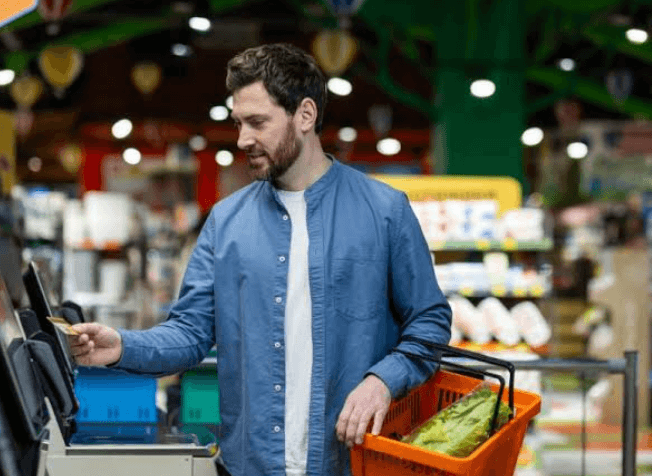
Self-checkout became familiar through grocery, and that association has shaped how everyone else thinks about it. Retailers in other formats tend to assume the technology is built for high-volume food shopping and does not apply to them, and a few years ago that was broadly true.
It is less true now. The equipment has become cheaper and smaller, the software handles more transaction types, and formats that could never have justified a supermarket installation can now consider a machine or two. That has opened the question for a range of businesses that had never asked it.
Self-Checkout Kiosks now appear in settings that would have been implausible not long ago, and the deciding factors in those settings are different from the ones that apply in grocery, which is why borrowed assumptions produce poor decisions.
Several formats have found genuine fits.
Cafeterias and staff canteens have adopted self-service widely, because the transaction is simple, the peak is extremely concentrated at lunchtime, and the customers are repeat users who learn the system quickly.
Convenience and forecourt retail suits it well: small baskets, barcoded goods, and a rush pattern that leaves staff overwhelmed at predictable moments.
Museum and attraction shops handle a burst of small purchases at closing time, and a self-service point absorbs that without an additional staffed position.
Garden centres and hardware retailers use it for the small-basket customer buying two items, while keeping staffed lanes for the larger trolley and for anything requiring advice.
Libraries and campus environments have used self-service for a long time, and the customer base adapts readily.
Pharmacy front-of-shop and similar mixed formats use it for the general range while keeping restricted items at the counter.
The criteria differ from grocery in emphasis.
Basket size still dominates. Formats where most transactions are a handful of items are the strong candidates, and this is more common outside grocery than people assume.
Peak concentration matters more in small formats than total volume does. A shop that is calm all day except for forty minutes has exactly the problem self-service solves.
Product identification is the practical constraint. Barcoded goods work; loose, weighed, or unlabelled items do not, and formats with a high share of the latter will struggle.
Restricted categories set a ceiling. If a large proportion of transactions require verification, the intervention rate makes the economics poor regardless of everything else.
Space is a real limit in small formats. A machine occupies floor area that might be generating sales, and that trade-off is more acute in a shop of a hundred square metres than in a supermarket.
Customer familiarity carries over. Most people have used self-service somewhere, which removes the learning barrier that existed a decade ago.
The arithmetic is different when you are considering one or two machines rather than eight.
A single machine cannot save a staff position, since somebody has to attend it. The gain is throughput at peak rather than a reduction in hours, and the case has to be made on that basis.
Two or three machines with one attendant begins to produce a genuine labour effect, and this is the point at which most small formats find the return.
Space cost has to be counted. In a small shop the floor area is not free, and the displaced sales are part of the calculation.
Shrink increase applies here as elsewhere, and in formats with high-value small goods it can be material.
The realistic case in most small formats is queue reduction and customer choice rather than labour saving, and framing it that way produces better decisions than borrowing a grocery business case.
Full self-checkout is not the only option and sometimes not the best one.
Assisted self-service, where a staff member is present and customers scan their own items, suits formats where the interaction matters but the scanning is the bottleneck.
Mobile and tablet-based checkout, where staff take payment anywhere in the shop, addresses queueing without any fixed installation and suits shops with variable layouts.
Order-and-pay kiosks in hospitality settings handle a different problem entirely, moving ordering rather than payment away from the counter.
Scan-as-you-shop suits formats with regular customers and larger baskets, though it requires a level of scale and system maturity that most small retailers will not have.
The right answer depends on where the actual bottleneck is, and identifying that before choosing equipment is more useful than deciding what to install first.
For a small format considering this, a limited trial answers the question better than analysis.
Install one or two units rather than converting the checkout area, and place them where the queue actually forms.
Run it through a full seasonal cycle if the business is seasonal, since a summer result may not predict a winter one.
Measure utilization, intervention rate, and transaction time, and compare against the staffed lanes rather than against an expectation.
Ask customers, since in a small shop the relationship matters more than in a supermarket and a change that irritates regulars is not worth a modest efficiency gain.
Then decide whether to expand, adjust, or remove, with real data from your own shop rather than a case study from a format that does not resemble yours.